
Finance teams often face the same challenge: operating cash must stay available, but surplus balances should not remain unproductive. Smart cash automation solves this by helping businesses put excess liquidity into work without affecting daily execution. While liquidity remains essential for payroll, supplier payments, tax obligations, and day-to-day operations, surplus cash should also contribute to financial performance. Smart cash automation allows businesses to achieve both goals with confidence.
Smart automation moves excess funds into interest earning accounts or low risk short term instruments, which helps businesses generate additional returns while maintaining immediate access to working capital. The result is stronger treasury efficiency without compromising operational agility.
Strategic framework for automated liquidity management
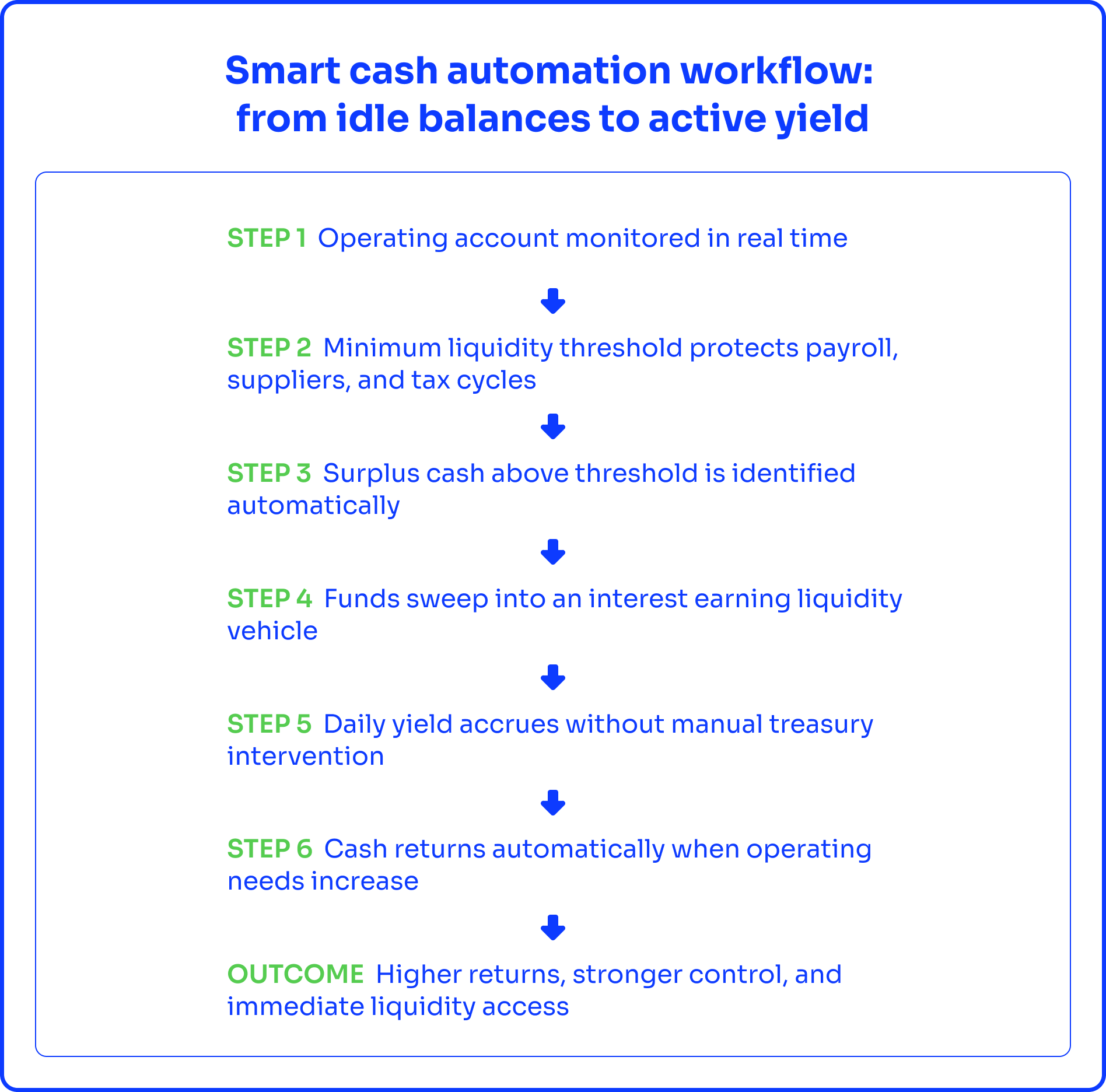
Smart cash automation is a treasury process that uses predefined rules to manage surplus liquidity. A business sets a minimum operating balance based on its normal cash requirements. Once the balance in the primary account rises above that threshold, the system automatically transfers the excess to a designated earning vehicle.
These vehicles may include instant access savings accounts, money market funds, or short notice deposits, depending on the organisation’s liquidity policy.
When the business needs additional funds, the system can return the cash promptly, ensuring continuity across operations.
Preserving liquidity without compromising yield
Many finance leaders hesitate to optimise idle cash because they fear losing access to funds. This concern is understandable, especially in industries with fluctuating demand, seasonal revenue cycles, or fast-moving growth plans.
Smart automation addresses this issue by combining yield generation with liquidity management. Businesses can direct surplus cash into options that remain accessible within the same day or the next business day rather than locking funds away.
This flexibility supports better decision making. Whether the company needs to secure urgent inventory, respond to a market opportunity, or manage unexpected expenses, the cash remains within reach.
Practical gains for finance and operations
1. Convert idle balances into measurable income
Every pound held beyond operational needs should work harder. Automated transfers ensure excess balances generate returns instead of remaining inactive.
2. Reduce manual treasury effort
Automation removes the need for constant manual monitoring. Finance teams can rely on structured rules to maintain discipline and consistency.
3.Improve control over liquidity movement
Manual cash sweeps often create delays and increase the risk of oversight. Automated workflows improve control and reduce avoidable errors.
4. Free teams for higher value decisions
By reducing repetitive tasks, treasury and finance teams can focus on forecasting, scenario planning, and strategic capital decisions.
A practical rollout approach
A practical rollout starts with identifying predictable cash commitments for the next 30 to 45 days. Payroll, supplier cycles, tax payments, loan servicing, and emergency buffers should shape the minimum operating balance.
The next step is to segment surplus cash by access need. Funds required within a week can move into instant access products, while balances with a longer horizon may suit short notice treasury instruments.
Clear rules make the system useful in real business conditions. Teams should set transfer triggers, return thresholds, approval alerts, and exception limits so the process supports real workflows rather than creating friction.
A regular review cycle keeps the structure relevant. As revenue patterns, expansion plans, and cost bases change, the thresholds should move with them.
Where this creates immediate business value?
A growing ecommerce business with weekly sales spikes can use automation to separate operating liquidity from temporary surplus cash. Once the account exceeds a threshold linked to fixed monthly obligations, the excess moves automatically into an interest-bearing liquidity vehicle.
This structure creates immediate value in two ways. The finance team no longer spends time on repeated transfers, and the surplus begins generating a visible monthly contribution. That additional income can directly offset payment gateway fees, support software subscriptions, or fund campaign testing without touching core working capital.
Closing perspective
Smart cash automation is a practical treasury strategy for modern businesses. It enables organizations to strengthen returns on idle balances, improve process discipline, and preserve the flexibility required in competitive markets.
The most effective businesses no longer treat surplus cash as passive. They use automation to make liquidity productive while keeping capital available for growth, resilience, and rapid decision making.
FAQs
1) Which businesses benefit most from smart cash automation?
Businesses with fluctuating balances, seasonal sales patterns, or strong cash reserves often see the greatest value.
2) Is the setup process difficult?
No. Most modern banking and treasury platforms allow rule-based setup with straightforward balance thresholds.
3) Can this support financial forecasting?
Yes. Automated cash movement creates cleaner visibility into true operating liquidity, which improves forecasting accuracy.
4) How often should automation rules be reviewed?
A monthly or quarterly review works well, especially during periods of rapid growth or market change.