
As a business grows, payments often become part of the background.
Teams send vendor payouts, collect customer payments, manage subscriptions, and handle platform fees every day. Everything seems to work well. Revenue grows, transaction volume rises, and operations feel stable.
Then the quarter ends and margins feel tighter than expected.
Most founders first review pricing or sales performance. However, the real issue often lies elsewhere. It sits in a part of the business that rarely gets enough attention: the cost of moving money.
Most businesses track revenue closely. Far fewer track what every payment actually costs.
This creates a blind spot that slowly affects profitability.
What Cost Observability Means
Cost observability in digital payments means having a clear, real-time view of every cost involved in moving money.
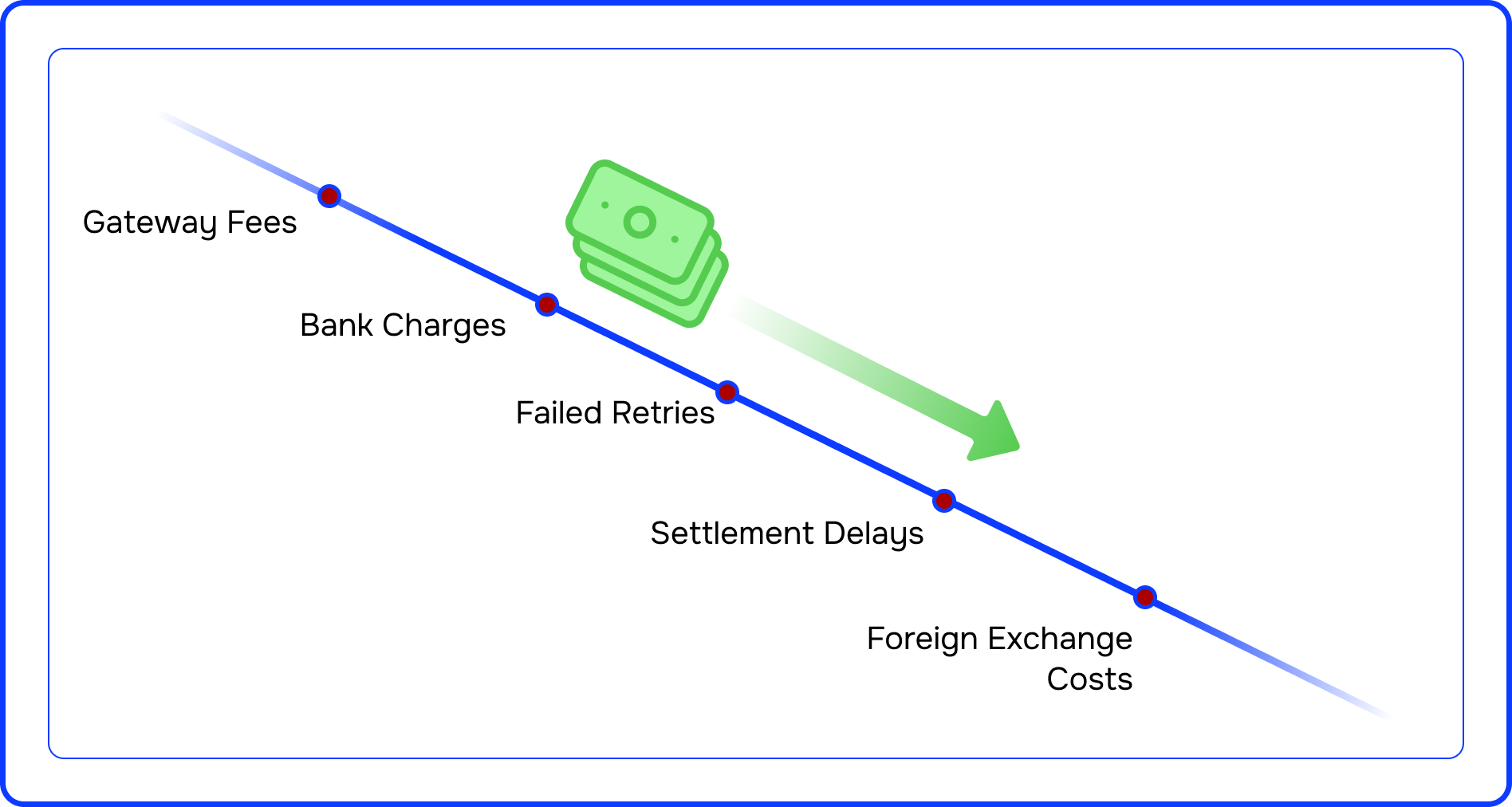
This includes more than basic transaction fees. It covers processing charges, bank fees, platform commissions, settlement costs, foreign exchange charges, and the cost of failed transactions.
When businesses understand the full cost behind every payment, they can make better financial decisions.
Where Payment Costs Hide
Payment costs rarely appear in one place.
Instead, they remain spread across systems, accounts, and workflows.
A business may use IMPS or RTGS even when a lower cost payment option is available. Different bank accounts may also carry different fee structures. Gateway fees may look small at first, but they increase quickly as transaction volume grows.
Failed payments also increase costs. Retries, reversals, delays, and manual follow ups all consume time and money.
Finance teams often spend hours reconciling transactions, checking mismatches, and resolving payout issues. These operational costs are easy to miss.
Each cost may seem small on its own. Together, they can reduce margins more than expected.
Why Most SMBs and MSMEs Miss This
The issue is usually not a lack of data.
Most SMBs and MSMEs already have payment data available across their systems.
The real challenge is fragmentation.
Payments move through multiple bank accounts, several payment rails, gateways, ERP tools, and spreadsheets. Because the data sits in different places, teams struggle to build a complete view of total payment costs.
As a result, businesses often react only after costs rise.
What Better Visibility Changes
A clear view of payment costs changes how a business operates.
Leaders can choose more efficient payment methods, reduce avoidable charges, improve routing, and forecast cash flow more accurately.
Teams can also reduce failed transactions and automate reconciliation.
The biggest benefit is simple. Margins improve without needing to increase revenue.
Where to Begin
The first step is straightforward.
First, list every payment channel your business uses.
Second, understand the fee structure for each one.
Third, track total payment costs every month.
Fourth, review high frequency payment flows to identify where most money moves.
Finally, look closely at where failures, retries, and manual intervention happen most often.
This approach works well in the early stages.
As transaction volume grows, manual tracking becomes difficult. At that point, a consolidated view becomes much more valuable.
Moving Towards Better Visibility
Platforms such as Yobo help businesses bring payment activity into one place.
With a single dashboard, teams can monitor cash movement in real time, track transactions across accounts, and understand how much it costs to move money.
This visibility helps businesses improve efficiency, protect margins, and make stronger treasury decisions.
Final Thought
Most businesses do not ignore payment costs deliberately.
They simply do not see them clearly enough.
As transaction volume increases, these hidden costs grow quietly in the background.
Businesses that improve visibility build stronger margins over time.
In today’s financial environment, how money moves matters just as much as how it is earned.
FAQs
How often should payment costs be reviewed?
A monthly review works well for most businesses. High volume businesses may benefit from weekly reviews.
Can businesses reduce costs without changing payment providers?
Yes. Better routing and choosing the right payment method can reduce costs significantly.
Are failed transactions a major cost factor?
Yes. Repeated failures increase direct costs and create extra operational work.
Does cost tracking require advanced tools?
Not at the beginning. Many businesses can start with simple reporting. As they grow, a consolidated platform becomes more effective.