
Key Takeaways
Use business banking software to gain clear cash visibility and make better real-time decisions.
Use it to reduce manual work by automating payment tracking and cash flow forecasting.
Choose a solution that remains simple while supporting business growth.
What Is Business Banking Software?
Business banking software is a platform that provides real-time/near real-time visibility across your business bank accounts and financial activity.
It allows businesses to track balances, manage vendor payments, and monitor cash flow from a single dashboard. Instead of relying on fragmented bank portals and spreadsheets, decisions can be made based on current financial reality and not delayed reports. Platforms like Yobo.money are a classic example of a business banking Software.
How It’s Different from Accounting Software
Think of accounting software as a rear-view mirror. It shows where you’ve already been. It records past transactions, manages compliance, and prepares financial statements.
Business banking software is more like navigation. It shows where you are right now and helps you plan where you’re going. It provides real-time cash visibility, supports payment management, and enables forecasting. This allows businesses to spot cash gaps or surpluses early and act before issues arise.
Accounting records performance. Business banking software protects liquidity.
Why Do You Need Business Banking Software?
As your business grows, financial management becomes more complex. Multiple bank accounts (to learn more about how to manage this read), recurring vendor payments, payroll deadlines, and working capital pressure all increase.
Founders often switch between bank portals and spreadsheets just to understand available cash. By the time clarity arrives, commitments may already be made.
Accounting software keeps compliance in order, but it doesn’t show where the business stands right now. Business banking software brings near real-time visibility into daily cash movement, helping founders plan ahead and avoid last-minute stress.
How will it save your time?
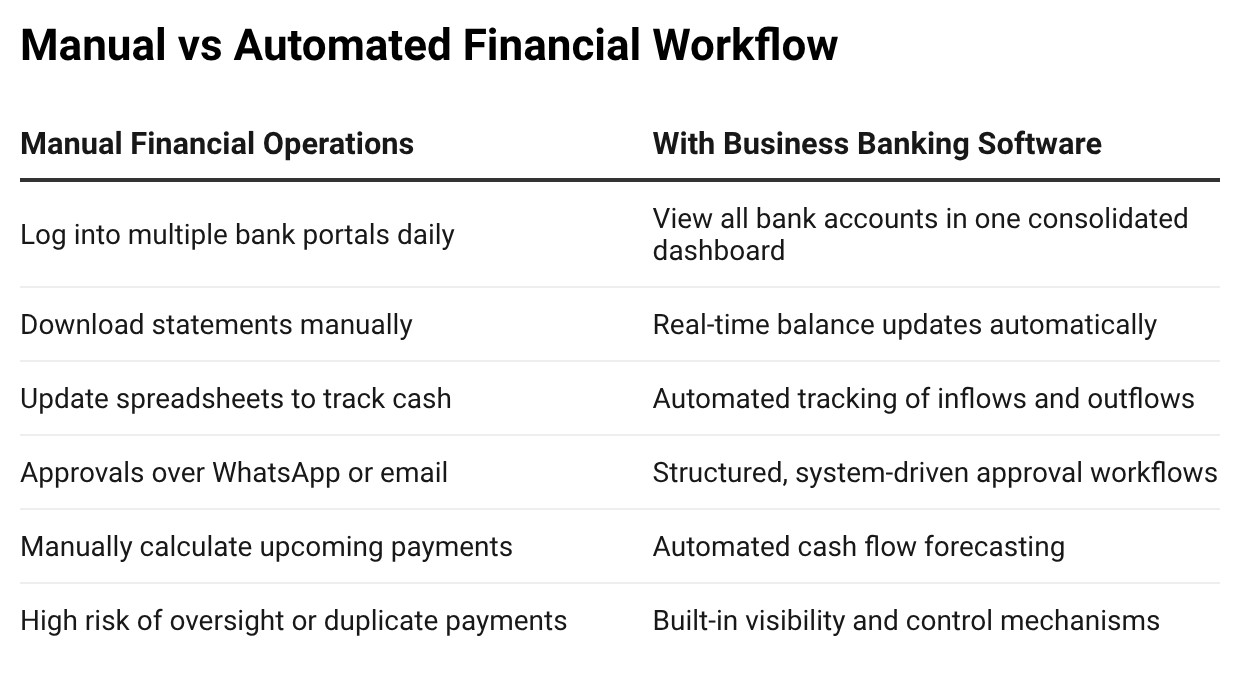
How SMBs and MSMEs Can Fit It into Daily Operations
Introducing business banking software does not require replacing your entire process overnight.Start with visibility. Connect your primary business bank accounts and use the platform to monitor balances and inflows. This replaces manual balance checks.
Next, align it with your existing payment process. If your accountant prepares payments and the founder approves them, replicate that structure inside the system using defined approval workflows. This strengthens maker-checker controls without changing responsibilities.
Then, move vendor payment scheduling into the platform. Instead of processing payments ad hoc, schedule them in advance based on due dates and cash position.
Finally, activate cash flow forecasting. Once transaction data stabilizes, use automated projections to review expected inflows and outflows weekly. This integrates forecasting into routine financial review meetings.
Over time, the software becomes part of your daily operations and not an additional task.
Quick Evaluation Framework to choose the right platform
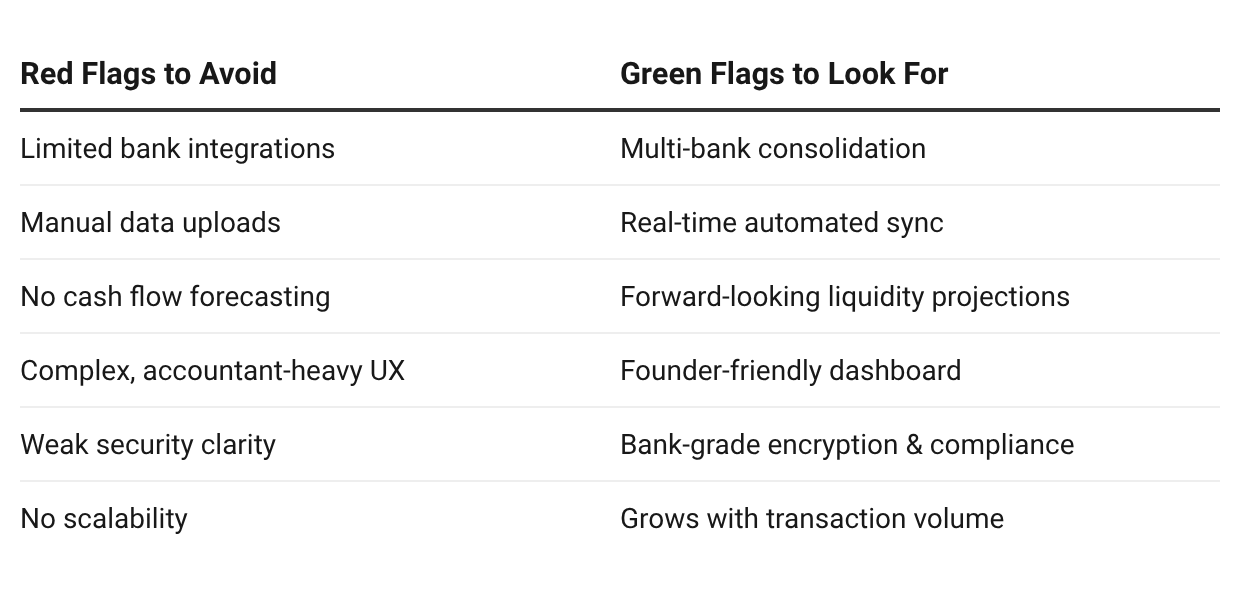
Choose platform that has clarity and automation over feature overload. Simplicity and visibility matter more than complexity.
Final Takeaway
Business banking software is no longer a luxury for growing SMBs and MSMEs. It is operational infrastructure.
Real-time visibility improves working capital control and decision-making. The right tool simplifies workflows, reduces uncertainty, and turns reactive cash management into proactive planning.
Clear visibility and automated forecasting allow businesses to focus on growth instead of constantly firefighting cash issues.
FAQs
1. What is business banking software?
Business banking software gives businesses real-time visibility into their cash position and allows them to manage payments and cash flow from a single platform.
2. How is business banking software different from accounting software?
Business banking software focuses on current cash position and future cash flow, while accounting software records past transactions and ensures compliance.
3. Do small businesses need business banking software?
Yes. It helps small businesses reduce manual work, improve cash visibility, and gain better control over daily financial operations.
4. Is business banking software difficult to set up?
No. Most platforms allow businesses to securely connect bank accounts, integrate accounting systems, and define approval roles with minimal effort.
5. How does business banking software improve cash flow management?
It provides clear visibility into inflows and outflows, enabling businesses to plan spending, forecast liquidity, and avoid unexpected cash shortages.