
Why Your Current Budget Might Be Costing You More Than You Think
Do you really know where every rupee in your business is going? Many SME and MSME owners check monthly reports and see “numbers look fine,” only to realise later that some departments overspent; others underutilised their funds, and overall profits are lower than expected.
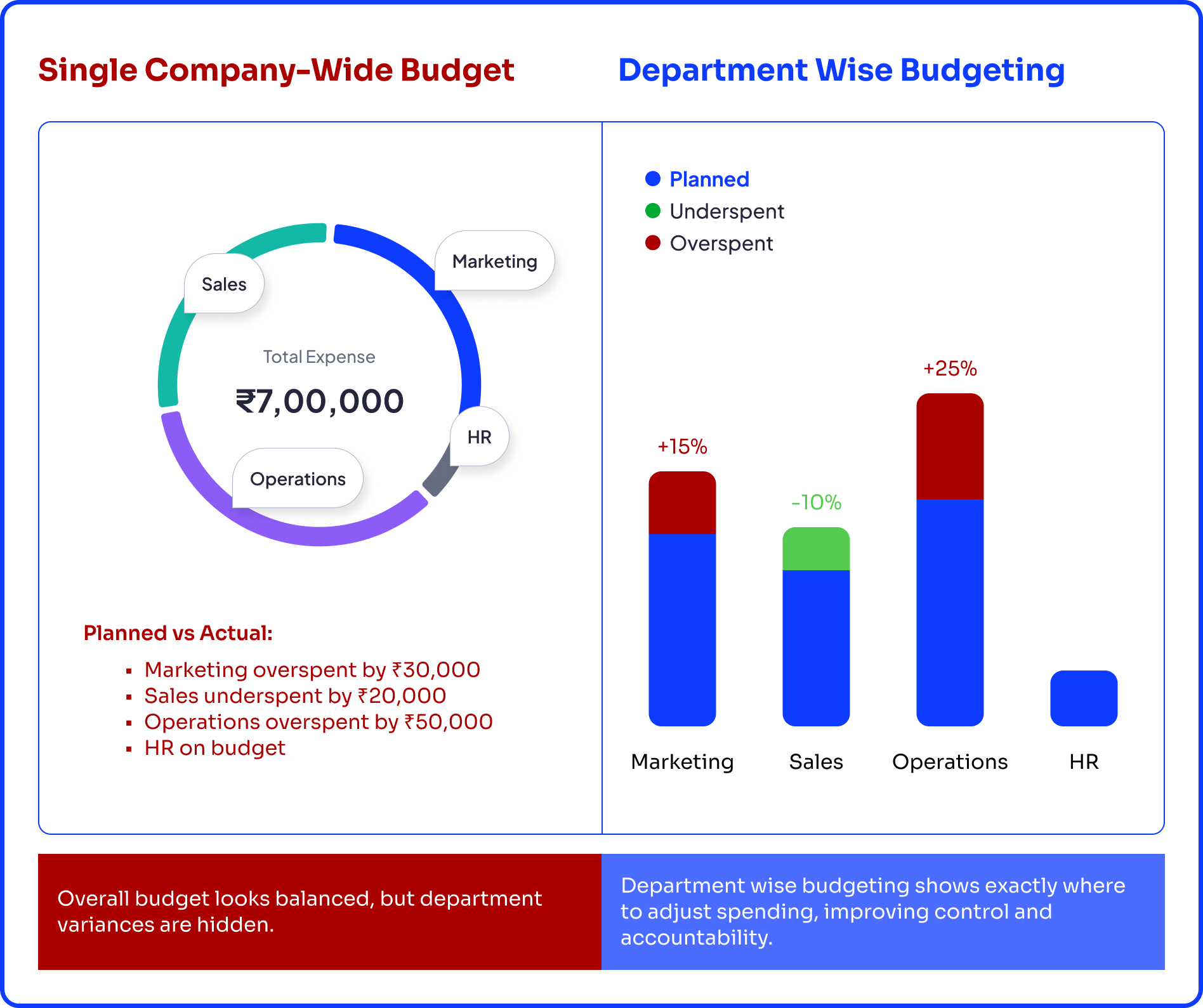
The problem isn’t spending itself; it’s visibility. Most SMEs and MSMEs rely on a single company-wide budget, which gives an overview but hides the details that matter. Marketing might overspend; operations may underuse resources, and no one notices until it’s too late.
Without clear departmental insight, financial control is always one step behind. And even if you do have some visibility, timing matters. Having knowledge of how money moves through your business is just as important as knowing how much it is being spent. While this blog focuses on budgeting, keeping cash flow in mind early ensures departments don’t just stick to limits but also operate within the reality of available funds.
How Department Wise Budgeting Changes the Game
Department-wise budgeting solves these problems by allocating specific budgets to each department, along with clear spending limits and goals.
Take a small manufacturing SME/MSME as an example. They previously pooled all funds in a central budget. Managers had little clarity, and leadership spent hours reconciling expenses. After introducing department-wise budgets:
- Marketing focused on campaigns with measurable ROI
- Sales invested in tools that improved conversions
- Operations optimised resources without overspending
Within months, they gained visibility, efficiency improved, and leadership could make informed decisions quickly.
Better Control and Accountability for SMEs and MSMEs
For smaller businesses, every rupee counts. Department-wise budgeting ensures managers take ownership of their finances.
A mid-sized IT services SME/MSME faced repeated project cost overruns because approval responsibilities were unclear. After assigning budgets to each department, managers tracked spending weekly, corrected issues early, and improved efficiency. This all happened without the owner micromanaging each transaction.
This approach also enables strategic allocation of resources. High-performing departments can receive additional support, while underperforming areas can be reviewed and optimised. SMEs and MSMEs can ensure every rupee is used where it creates the most value.
Smarter Planning, Forecasting, and Decisions
Detailed department-level budgets make planning and forecasting more accurate. Many SMEs and MSMEs deal with unpredictable challenges: delayed payments, sudden orders, or operational bottlenecks. Department-wise budgeting allows them to anticipate costs and adjust quickly.
For example, consider a small e-commerce SME/MSME tracking spending for one peak month:
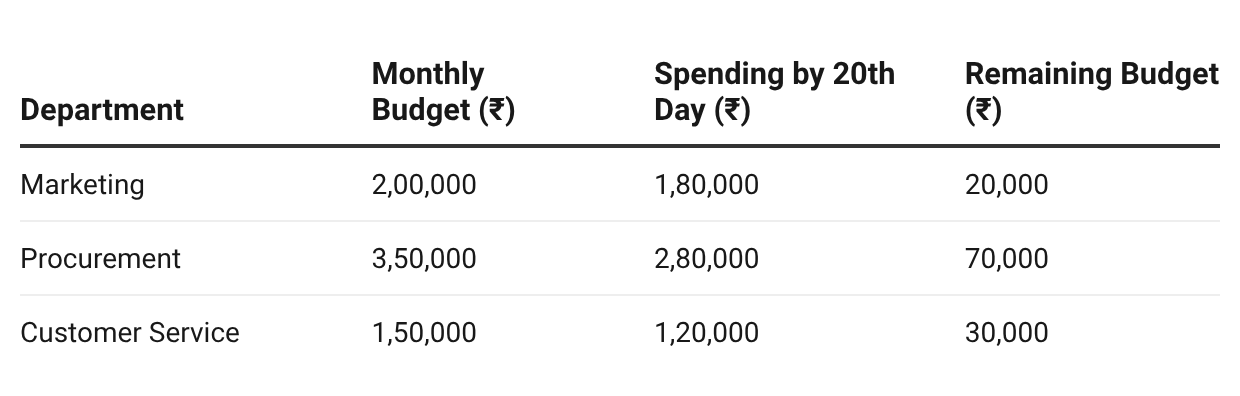
By monitoring these numbers alongside actual cash inflows, leadership ensured marketing could ramp up campaigns without risking a cash crunch, while procurement temporarily paused non-essential purchases. This allowed the company to meet increased demand during the peak season without over- committing funds.
How to Implement Department Wise Budgeting in Your SME or MSME
A clear, step-by-step approach ensures that SMEs and MSMEs can introduce department-wise budgeting effectively.
- Analyse Past Spending: Review historical data to understand trends and set realistic baselines.
- Collaborate with Department Heads: Identify priorities, planned activities, and required resources.
- Set Targets and KPIs: Define spending limits and performance metrics for each department.
- Monitor and Adjust: Compare actual spending with the budget regularly and adjust when needed.
Platforms like Yobo make this process easier. Real-time tracking, automated reporting, and centralised visibility allow SME and MSME owners and finance managers to maintain control without wasting hours on spreadsheets.
Conclusion: Why SMEs and MSMEs Should Adopt Department Wise Budgeting
Department-wise budgeting gives SMEs and MSMEs clear visibility, accountability, and strategic control over spending. High-performing departments get the support they need; inefficiencies are identified early, and cash flow. These are the lifelines of your business. It is easier to manage them when aligned with budgets.
For growing SMEs and MSMEs, this approach is essential. With a platform like Yobo, it enables businesses to scale efficiently while keeping financial control firmly in hand.